

Wednesday, February 12, 2025
Time to read: About 4 minutes. Contains 986 words.
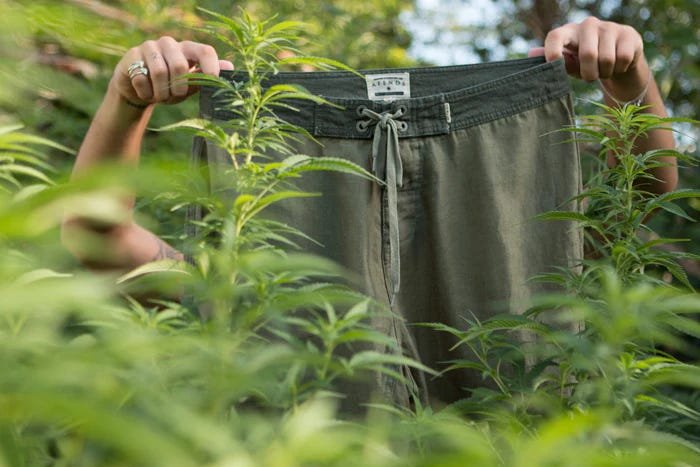
I recently lost hours stewing over this Fast Company story about the Bezos Earth Fund’s latest initiative. Bezos committed $34 million to researchers developing “next-generation textiles,” such as biodegradable fibers and plastic-free synthetic silk. I agree that the fashion industry is in dire need of change—the most ubiquitous materials (polyester, viscose, nylon) are derived from oil and coal and are not biodegradable, shedding microplastics and forever chemicals that are making us sick and potentially infertile. My problem with this initiative is that it overlooks a proven, affordable, less environmentally taxing option with plenty of positives: hemp.
Medieval colonizers hoisted their ship’s sails with sturdy hemp rope. George Washington grew his own crop to make rope and fabric. In some Iroquois tribes, each family would be responsible for growing the hemp they needed for textiles. In 17th-century France, some of the first iterations of denim jeans were made from a hemp twill that was dyed indigo.
Yes, by “hemp,” I’m talking about cannabis plants. There is no biological difference between hemp and cannabis—it’s all cannabis. Just different strains with different cannabinoid contents. But in modern, legal categorizations, “hemp” refers to cannabis containing less than .3% THC, which is useful when talking about plants better for manufacturing than consumption purposes.
Hemp fabric is shown to have a natural SPF quality far superior to cotton’s, and it requires less water, land, and pesticides than cotton. It can also produce 2-3 times more usable fiber per acre, and hemp textiles are stronger, longer-lasting, and have antimicrobial properties. Brands like Jungmaven, Afends, and many others have demonstrated that a range of stylish, comfortable, versatile garments can be made exclusively with hemp or a blend of plant-based materials.
So, why isn’t hemp as ubiquitous as cotton? Largely because of Prohibition-era bans on cultivating the plant—bans enacted with the support of people like then-Secretary of the Treasury Andrew Mellon, who’d recently invested in DuPont’s petroleum-derived textiles.
This is what revs me up about this stuff—hemp hasn’t been given a fair shot in modern times. You might be thinking, “but hemp is so stiff” or “hemp can’t stretch like spandex.” If chemists and manufacturers were able to innovate super-soft microfiber textiles from petroleum-based ingredients, I feel pretty confident that with just a bit more resources, we can replicate those textures with plant-based ingredients.
It’s cool that Bezos’s grant backs credible research projects like a biodegradable fiber grown from bacteria that feed on agricultural waste, but man…if just a portion of that $34 million was put towards optimizing processing machinery and developing an efficient global supply chain for hemp? It’d be world-saving. If we cracked hemp as a functional replacement for petroleum-based clothing fabrics, the positive impact reverberates far beyond fashion. Furniture upholstery, carpets, insulation, bedding, paneling—all of those are currently dominated by petroleum-based materials, and, with enough R&D, could all likely be replaced with hemp-based alternatives. The reduction in micro and nanoplastic pollution would be massive.
Then it comes down to the true end goal of this initiative. Is it to positively impact public health and environmental conservation? Or is it to make money on investments in costly tech innovations? Bezos’ track record here isn’t promising. But we never really thought he’d be our savior. Here’s hoping someone else will give hemp a shot.
Other Headlines On My Mind
Unprecedented rescheduling hearings start next week in Washington. On Monday, a hearing to discuss a proposal to transfer recreational cannabis from schedule I to schedule III of the Controlled Substances Act kicks off. This follows the reclassification of state-licensed medical cannabis to schedule III (although it is being contested). Things will start with testimony from parties “adversely affected or aggrieved by any rule or proposed rule issuable,” including the National Drug & Alcohol Screening Association (NDASA), the Tennessee Bureau of Investigation, and Smart Approaches to Marijuana. Whatever happens with this hearing, it’s worth noting that rescheduling would not guarantee federal decriminalization.
Even the White House is calling for an extension or amendment to the pending federal hemp ban. White House Office of Management and Budget (OMB) Director Russell Vought wrote to House Speaker Mike Johnson to urge “revising the Federal regulation of hemp to ensure the fair treatment of hemp products in a manner consistent with Amendment #54 offered to H.R. 8646 in the House Rules Committee, or, at minimum, an extension of implementation of the regulatory framework.” Music to hemp operators’ ears, to be sure, but unfortunately that Amendment he’s referencing was already blocked by the Rules Committee.
While no concrete change is in place yet, and many brands are investing in nootropic alternatives to maintain shelf space if it comes to pass (Nowadays and Kush Queen, to name a couple), I think there’s enough time (and wildcard energy in the current administration) for truly anything to happen between now and November.
Some of your favorite cannabis brands and esteemed cannabis lawyers are setting out to legalize cannabis the right way. A Chuffed fundraiser presented by the Responsible Cannabis Safety Coalition (which includes Rose Los Angeles) is raising legal funds to kick off efforts to enact true federal regulation of cannabis—med, rec, hemp, all of it. The legal team includes Courtney N. Moran, LL.M., Chief Legislative Strategist for Agricultural Hemp Solutions, LLC, and Founding Principal of EARTH Law, LLC, who helped draft and negotiate the language included in the 2018 Farm Bill that federally legalized hemp.
The campaign intends to coordinate with the most important federal agencies to make this a practical reality, including implementation of interstate commerce, streamlining testing and manufacturing regulations, and improve safe, controlled access for 21+. It sounds like a dream, but this is how making it a reality starts: with this fundraiser to pay for lawyers and lobbyists to get this legislation written and co-signed by the right lawmakers.
Happy weekend, weed lovas,
Lauren Yoshiko
Hemp is the OG ancient textile! Excellent take.
Hemp makes beautiful clothing! One of my favorite sweaters is made from hemp. It’s soft, drapey, and lightweight, washes nicely. I’d buy more if it was easier to find!